Donor Recognition Plaques · Free planning resource
Donor Plate Material Comparison
Donor pieces in this collection use walnut, brushed and cast metal, and clear or printed acrylic. The comparison tool places two of those directions next to each other by appearance and typical use. Donor Wall Studio confirms exact grades and finishes in the quote. The tool ranks nothing, and it cannot judge your lobby's lighting.
Compare two material directions
Acrylic
- Appearance
- Clear, translucent or colored; layered shapes can create depth.
- Applications to discuss
- Display awards, table signs and layered graphics.
- Confirm for your project
- Thickness, edge finish, scratch exposure, attachment and artwork contrast.
Wood
- Appearance
- Visible grain and natural variation; finish influences appearance.
- Applications to discuss
- Wall plaques, desk pieces, stall plates and keepsakes.
- Confirm for your project
- Species, grain variation, coating, cleaning and moisture exposure.
These are design directions. Specific grades, finishes and construction determine performance; compare written specifications and samples for your use.
The decision behind a donor recognition display
A donation record is not automatically a publishable inscription. Confirm recognition preferences, household or organization grouping and any anonymous listings first. Reserved future positions belong in the layout calculation; they become manufactured plates only when the order actually includes them.
Keep with your brief: Approved recognition name, tier, plate position and future expansion plan.
Understand what the result means
Compare the intended use, appearance and confirmable specification for each candidate material
The comparison does not rank every acrylic, wood, metal or crystal product on a universal durability or price scale. A suitable choice depends on the actual specification and use. Keep the selected material direction with your brief, and ask for the proposed grade and finish in the written quote.
Brushed metal or acrylic plates for a bright lobby?
A museum's new entrance has a glass front, and the donor wall faces it. The advancement manager is choosing the material for Donor Wall Engraved Plates, which can be brushed metal or acrylic. She compares the two directions in the tool and reads the notes on appearance. Then she does what the tool cannot: she stands where visitors will stand, in the morning and late afternoon, and looks at how the wall catches the light. Glare matters more than she expected. She sends Donor Wall Studio two phone pictures of the wall at both times and asks which plate finish is proposed, and whether a sample of each can be quoted.
Check these details before using the result
- Choosing a plate finish from a screen
- Concept images are AI-generated and screens differ. Ask what physical reference is available before fixing a finish for the whole wall.
- Ignoring what is already mounted
- Additions should match existing plates. Compare against a plate from the wall, not against a new idea.
- Mixing materials between giving levels by accident
- If levels differ in material on purpose, write that rule down. Otherwise keep one material so later plates are simple to match.
Choose the pieces your plan describes
Use these designs to discuss the physical format, personalization and intended use. The images are original AI-generated concepts; final dimensions, material and construction are developed in the quote and proof.
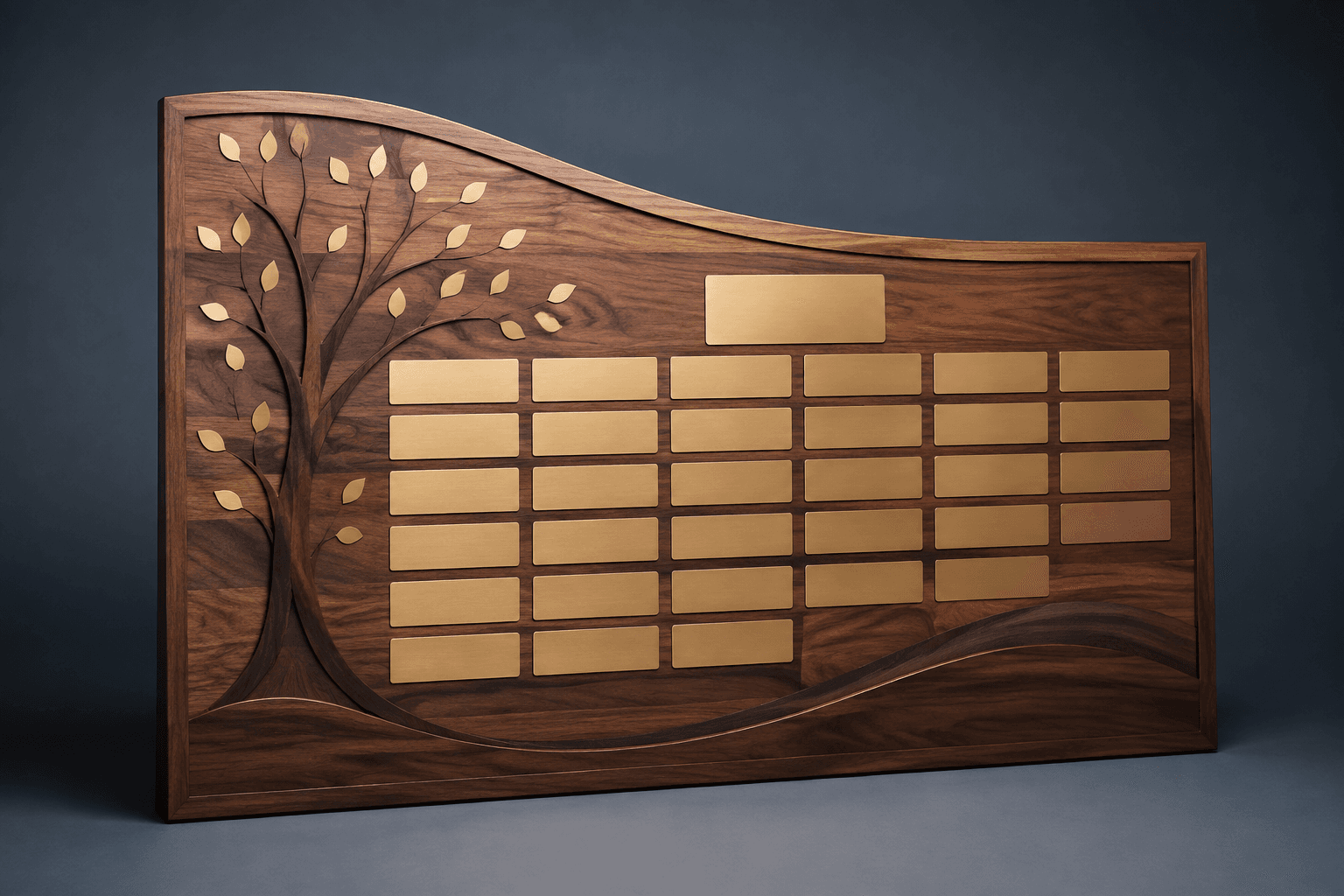
Design concept · Walnut with modular metal plates
Donor Recognition Wall
Map the first group of names and the likely expansion before choosing the overall width. Decide whether new gifts add a leaf, replace an entry or move a donor to another tier so the design can grow coherently.
Explore the design and personalization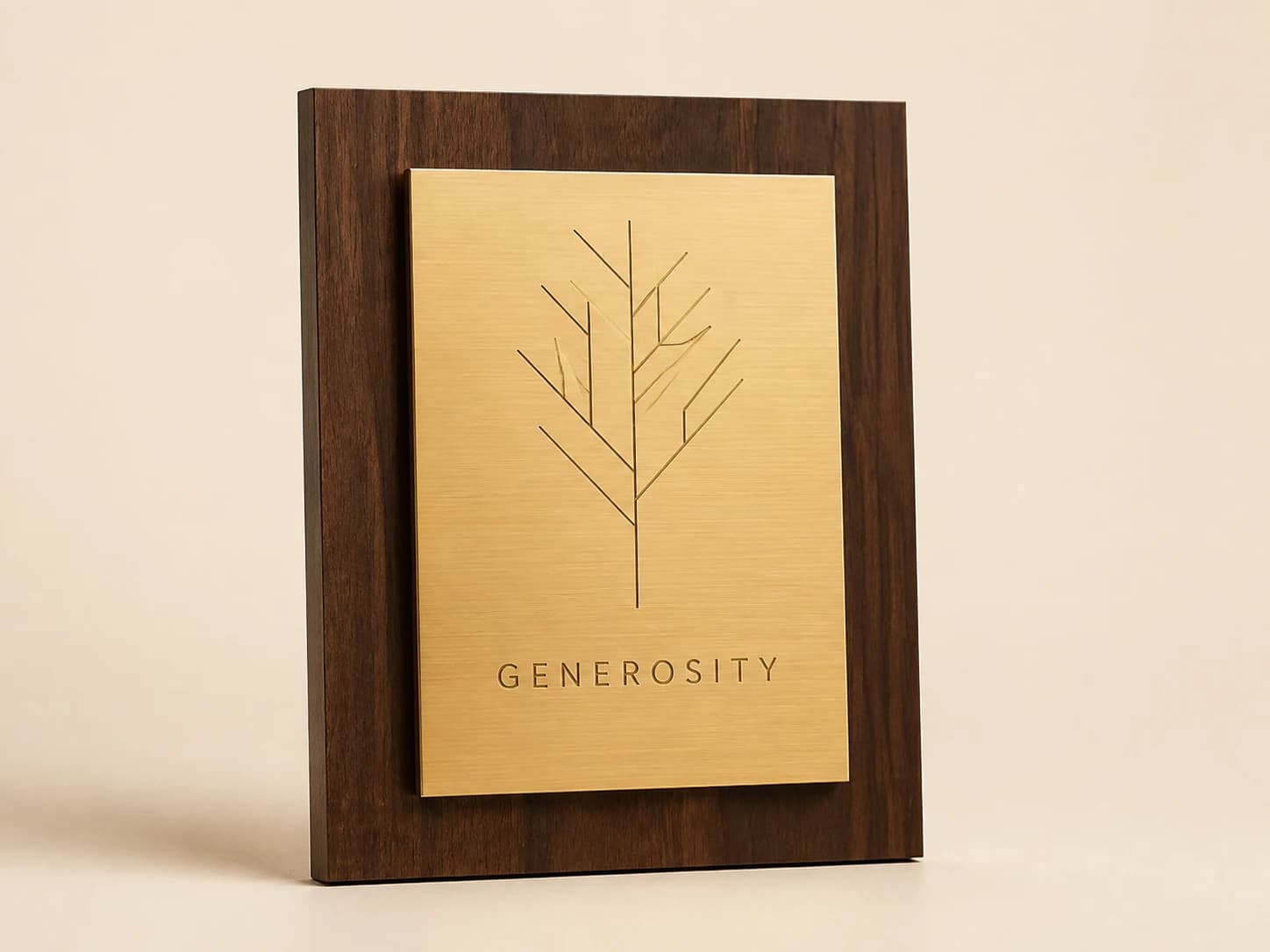
Design concept · Walnut with metal plate
Individual Donor Recognition Plaque
Ask how the donor wants to be identified publicly, including family names, joint gifts and anonymity. A project-specific thank-you often communicates the gift's purpose without publishing an amount or implying a result you have not documented.
Explore the design and personalization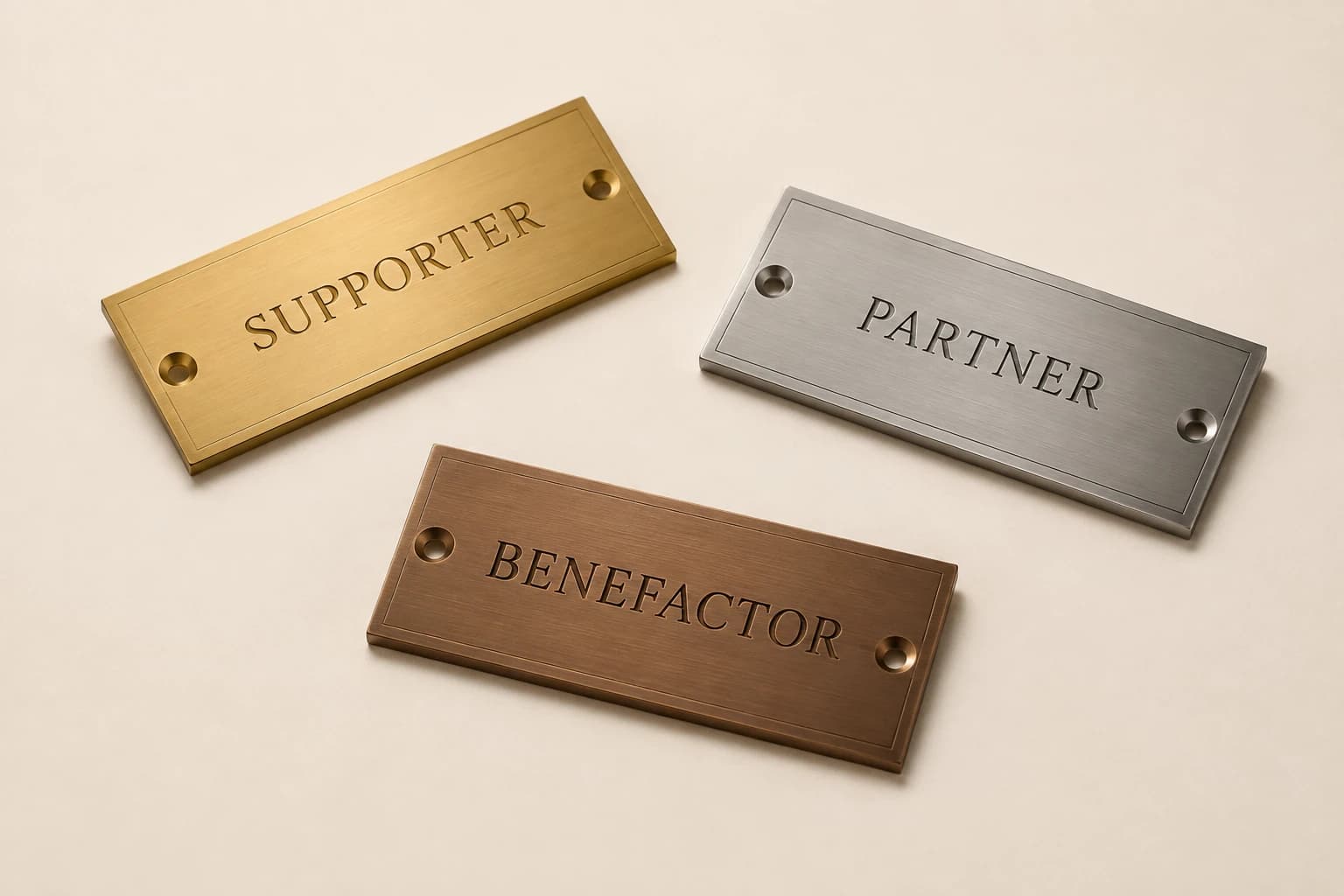
Design concept · Brushed metal or acrylic
Donor Wall Engraved Plates
For an addition, provide the dimensions and a straight-on photograph of an existing plate. Match the actual mounting and spacing requirements as well as the wording; a similar-looking plate may not fit the current system.
Explore the design and personalization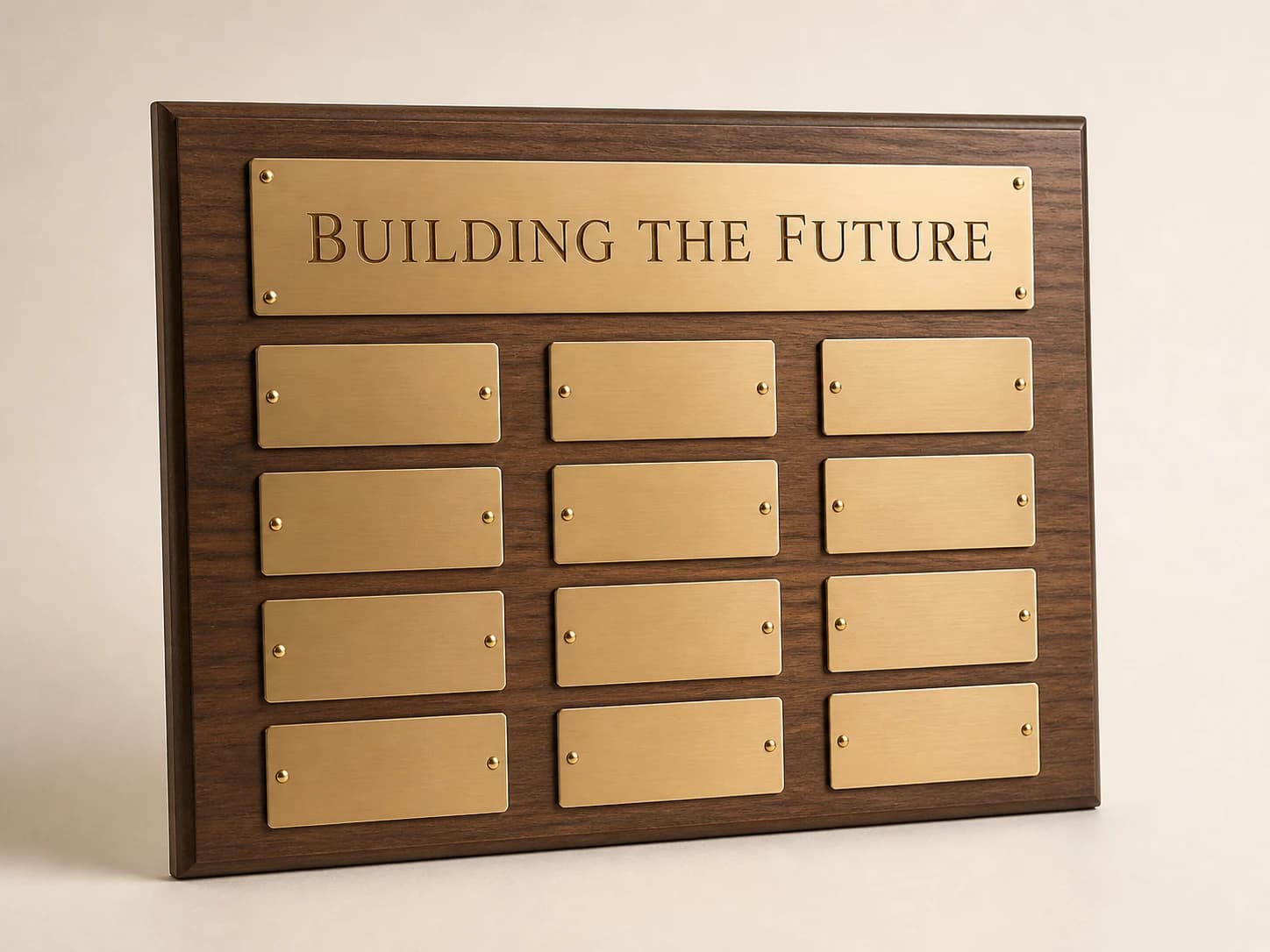
Design concept · Walnut with metal plates or full-color
Capital Campaign Recognition Board
Agree on tier order, name sorting and recognition rules before design. Long organization names and family listings need room, so use the real approved list to choose the board size instead of designing around placeholder names.
Explore the design and personalization
Design concept · Optical crystal-style acrylic
Crystal-Style Donor Award
Choose this format when the recognition is a gift to the donor rather than a permanent building display. Keep the main inscription personal, and reserve detailed project outcomes for a separate, documented update.
Explore the design and personalizationQuestions about this checker
Which donor plate material is easier to read?
Readability comes from contrast between letters and background, letter height and the light on the wall. Either metal or acrylic can read well or badly depending on those. The tool lists what to specify. Ask for the proposed contrast and letter height in the quote, and judge them at your real viewing distance.
Can a naming plaque go outside the building?
Tell us the exact spot: under cover or open to weather, on brick, stone or a post. The Room & Facility Naming Plaque is specified in cast metal, aluminum or a project-specified composite. The right choice and fixing for an exterior wall should be agreed in the quote and reviewed by whoever maintains the building.
Which buying guide should you read next?
All buying guidesFor worldwide Donor Wall Studio orders, compare donor-name panels against the lobby’s real background and lighting before choosing brushed metal or clear acrylic. Transparency, printed backing and surface finish can change the proposed appearance. Ask for a representative name-field sample in the intended setting rather than treating a clean catalog rendering as a readability test.
For worldwide Donor Wall Studio orders, brief the donor wall with a measured display area, component dimensions, gaps and a position map for the installer. A row-and-column count establishes capacity only. Keep the overall wall, proposed arrangement and attachment decisions distinct so the final handoff describes the actual installation location.
A practical name style guide with before-and-after examples, exact character counts, ordering options compared for future additions, anonymous-listing choices and a downloadable name-approval template. Current results are a single hospital PDF and short vendor posts without fit checks.
For worldwide Donor Wall Studio orders, count approved donor names, reserved positions and physical blank fillers separately. A vacant slot is space, while a filler is an ordered component. Decide which unused positions receive blanks now, which remain open and whether any additional stock has an approved later use.
Continue your order planning
Quantity Calculator
Add up the pieces in a donor order from your own numbers: approved inscriptions, plates per donor, title plates and any fillers you choose to make.
Budget Estimator
Add quantity times unit cost to setup, shipping and tax figures you supply, and get one planning total for a donor wall or a set of plaques.
Engraving Text Length Checker
Paste donor inscriptions one line at a time and see which household, foundation or memorial names exceed the character budget you set.
Donor Wall Studio quote
Send your donor recognition plaque plan for pricing
For donor recognition plaques, Donor Wall Studio prices from the design, names now, room to grow, wall or gift, wording, artwork and mounting day. Paste the planning result into the message.