Donor Wall Studio · buyer guide
Brushed metal versus clear acrylic donor panels in lobby lighting
For worldwide Donor Wall Studio orders, compare donor-name panels against the lobby’s real background and lighting before choosing brushed metal or clear acrylic. Transparency, printed backing and surface finish can change the proposed appearance. Ask for a representative name-field sample in the intended setting rather than treating a clean catalog rendering as a readability test.
Reviewed 2026-09-05 · AI-assisted editorial review. General buying guidance; illustrative scenarios are not customer case studies. Images are AI-generated concepts.
A donor panel is read in front of a real wall, with surrounding colors and objects that a blank rendering may omit. Clear material can make that background part of the visual composition, while a proposed opaque field creates a different relationship. Brushed metal also needs its actual finish and lettering treatment identified. The Donor Wall Engraved Plates concept provides both metal and acrylic directions, but it does not settle the finished appearance at a particular site. Start with the wall and reader position before selecting a material label. This page addresses that visual construction decision, leaving donor eligibility, tier names and capacity planning to the organization’s separate approved recognition records.
What does clear acrylic mean in the artwork proof?
Ask which areas remain transparent and which receive printing, backing or another treatment in the actual design. A clear panel can contain opaque name fields, translucent color or unprinted borders, depending on the proposed process. A white area on a screen does not reliably explain which of those outcomes is intended.
Request an artwork key that identifies the clear areas and the actual name background. The organization can then decide whether the wall color should remain visible behind a donor name or only around it. Keep that distinction in the released proof so a later production interpretation does not change the intended visual hierarchy without the reviewer noticing.
Signs.com distinguishes white-ink backing and transparent areas in its acrylic-sign printing options.
Sources: Signs.com: Acrylic Signs
How should brushed metal be described?
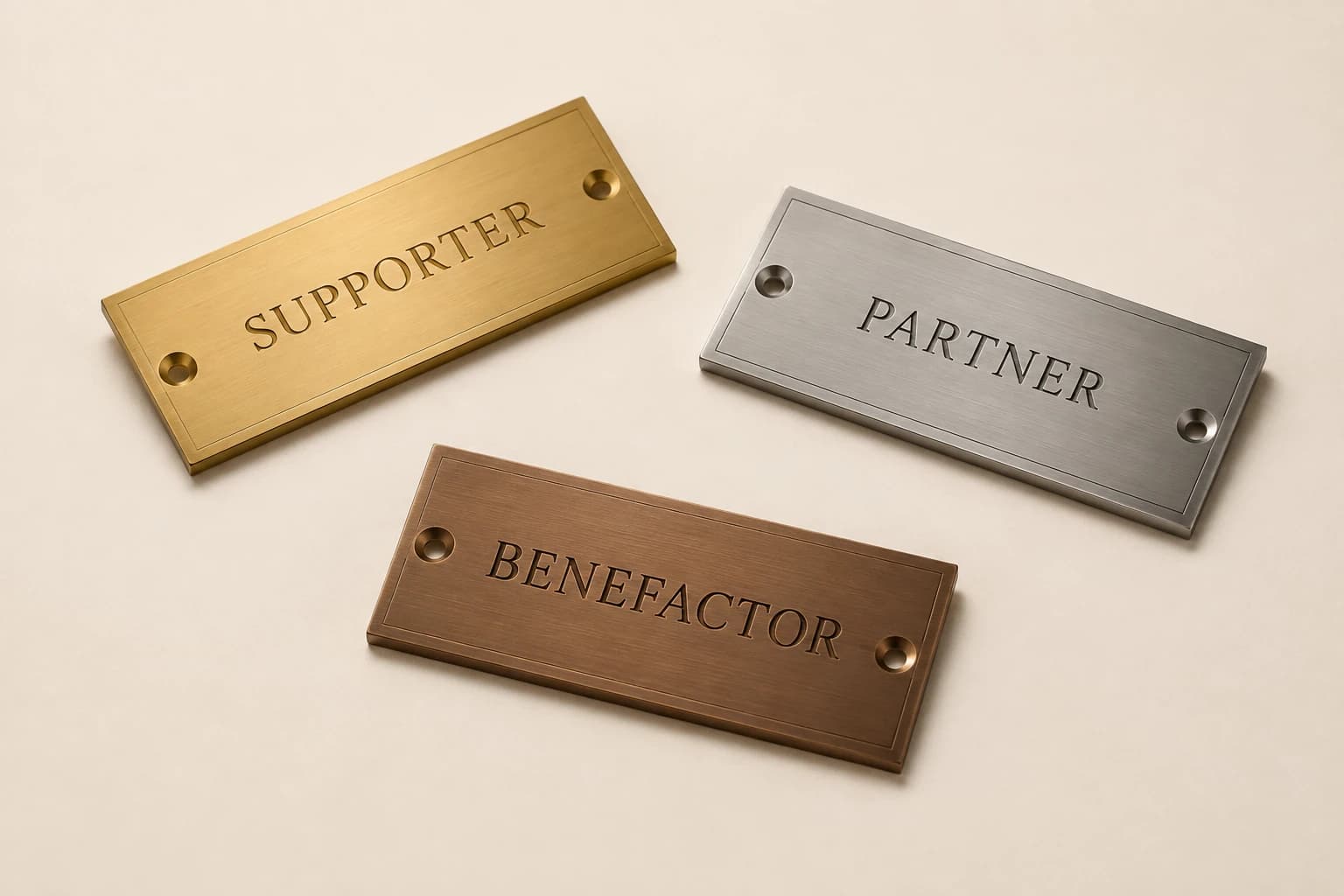
Specify the proposed metal surface and the lettering treatment separately, including any intended grain direction or background color described by the supplier. A metallic-looking print and a brushed metal face are different constructions even when a small photograph makes them appear similar.
Ask for a representative finish reference when that distinction matters to the donor wall. Review it beside the actual wall color rather than relying on a finish name alone. Do not assume every brushed material has the same reflective behavior or that one finish eliminates glare. The buyer’s role is to identify the intended appearance and request evidence for the actual proposal, not to assign universal performance from a category label.
Which viewing conditions should a sample cover?
Choose the positions and lighting conditions that the actual lobby’s responsible team considers relevant. A sample viewed only straight on during one quiet moment may leave the ordinary approach unresolved. Record the planned observation positions and the conditions under which the reviewer should return.
Keep the sample’s finish, printed name treatment and background the same as the proposed order wherever those details drive the choice. Do not manufacture a pass result from a digital simulation or another building’s photograph. The worksheet should provide places to record real observations later. Its purpose is to make the evidence request complete before the committee compares two materials on an uneven basis.

How can a sample remain representative without ordering the whole wall?
Use a small approved segment that includes the name treatment and the feature most likely to challenge the visual design. That may be a long donor name, an area of clear border or a representative heading transition. Ask the supplier what physical sample or production proof can represent those features and what it costs.
A generic material chip can explain a surface but cannot show the actual name hierarchy. Conversely, a printed paper mockup can explain placement without demonstrating the finished surface. Keep those evidence types distinct. The organization can request the next useful proof without pretending that a preliminary sample has validated every position or future addition in the complete display.
What belongs in a comparable metal-and-acrylic quote?
Give both proposals the same approved name-field dimensions, intended wall setting and artwork requirements. Ask each to identify material, face treatment, backing, edge finish and supplied mounting components. Include any sample work and shipping in the comparison, with installation or site changes separately described.
No Donor Wall Studio price range or minimum for this configuration is established here; request those figures for the selected scope. A clear panel without backing should not be treated as equivalent to a proposal that deliberately includes an opaque name field unless the committee has accepted that visual difference. The quote should make those choices visible instead of allowing similar product dimensions to imply identical finished objects.

Use the article’s example files
Use the worked comparison as a starting point. Replace its hypothetical dimensions and choices with the supplier’s actual proposal and the owner’s approved requirements.
What should be saved for later panel additions?
Retain the chosen material reference, actual name-field treatment, background decision and representative observation record with the approved artwork. A later coordinator needs to know which areas were intended to remain clear and which finish was reviewed in the lobby. If the wall paint or lighting changes, consider whether the earlier visual review still represents the setting.
Do not assume a new panel will appear identical to aged neighboring pieces without a current proposal. The saved record should make a future comparison specific: the same construction direction, current conditions and any visible differences requiring review. It should not turn one favorable sample into an indefinite performance promise for the whole recognition program.
How does the illustrative product-selection example work?
In a fictional donor-wall review plan, the committee wants to compare two proposed finishes from two reader positions under two relevant lobby lighting conditions. No observations have been made yet. The coordinator creates the full set of review rows so neither material is accepted after being seen under only its most favorable planned condition.
Two finishes multiplied by two positions and two conditions produces eight observation combinations. The worksheet names the combinations and leaves every result on hold. Four rows belong to each finish. This is a completeness calculation for the proposed sample review, not evidence that either surface passed a visibility test. The committee should record actual observations, identify the sample construction and return unresolved questions to the supplier. If the team later adds a third position, both finishes need that additional comparison under both selected conditions. The result should describe the real setting and sample rather than a universal ranking of acrylic and metal.
Optional calculation: Compare the proposed material descriptions
Which proposed construction fits the intended use?
Brushed metal, transparent acrylic and acrylic with a defined opaque name field create different relationships with the lobby background. Compare the actual lettering treatment and sample evidence for each. The organization should choose which background interaction it wants before asking a general finish preference to stand in for a reviewed display design.
| Option | Brushed metal face | Transparent acrylic name field | Acrylic with opaque name background |
|---|---|---|---|
| Best reason to choose it | Choose this when the proposed metal surface is the intended visible background for the donor names. | Choose this when seeing the wall behind the names is a deliberate part of the approved design. | Choose this when the design needs a defined name field while retaining clear material elsewhere. |
| What the buyer must review | Review the actual finish and lettering against the lobby wall from the selected reader positions. | Review the clear areas and actual name contrast in the intended background and lighting conditions. | Review the backing or print treatment and its boundary with transparent borders in a representative proof. |
| What the quote should identify | Identify the metal, grain or surface description, name treatment and representative sample scope. | Identify unprinted areas, any translucent treatment and the actual panel and mounting construction. | Identify the opaque areas, production method and any distinct artwork layer or backing component. |
What should you confirm before requesting this product?
Confirm the intended name background and the evidence needed to judge it in the lobby. A material sample, paper layout and finished name-field proof answer different questions. The organization should document the actual proposed construction and viewing conditions, then make its choice from observations rather than from assumed glare or transparency performance.
What should the material comparison cost include?
Ask Donor Wall Studio to quote the same name-field scope for each proposed construction, including material, decoration, backing, mounting components, sample work and shipping. Request its applicable minimum or range. A bare clear panel and an opaque-backed acrylic proposal are different scopes, even when their overall dimensions match.
Does clear acrylic mean the donor name has no background?
Not necessarily. The proposal may leave areas transparent, add opaque print or include a separate backing. Ask for a clear artwork key and representative name-field proof. A white screen background is not enough to show whether the actual wall will remain visible behind the name or only around the panel.
Can brushed metal be assumed to avoid glare?
Do not make that assumption from the finish category. Review the actual surface and lettering in the intended lobby conditions, using the reader positions selected by the organization. A sample can support that specific decision, but it should not become an unqualified claim about every brushed metal or every future location.
What does the eight-row worksheet prove?
It proves only that the proposed review includes two finishes, two reader positions and two conditions: eight combinations. All observation results remain on hold. The worksheet helps the coordinator request comparable evidence for both options; it does not contain real test results or establish that either material is readable at the site.
Should a later lobby repaint trigger another review?
Consider whether the new background changes the approved visual relationship, especially where transparent areas were intentional. Retain the original name-field and material references, then review the current setting with the responsible team. A repaint need not automatically replace the donor panels, but the earlier observation record may no longer describe their surroundings.
Sources and scope
The sources below support the cited technical details. The ordering workflows are editorial recommendations. Your project specification, price and schedule are established in the written quote and approved proof.
- Signs.com: Acrylic Signs · checked 2026-09-05
Which buying guide should you read next?
All buying guidesFor worldwide Donor Wall Studio orders, brief the donor wall with a measured display area, component dimensions, gaps and a position map for the installer. A row-and-column count establishes capacity only. Keep the overall wall, proposed arrangement and attachment decisions distinct so the final handoff describes the actual installation location.
For worldwide Donor Wall Studio orders, choose updateable donor tiles when the recognition program needs a defined process for additions or corrections. Choose permanent lettering for an approved list intended to remain fixed. Ask how one specific name would change before approving the wall’s initial appearance and future capacity.