Donor Wall Studio · buyer guide
How to List Names on a Donor Wall: A Name Style Guide (Couples, Families, Memorials, Anonymous)
List every donor name the way the donor approved it in writing, using one style rule for the whole wall. Donor Wall Studio, which ships donor walls and plates worldwide, recommends deciding five rules before anything is engraved: couples, titles, families and organizations, memorial gifts and anonymous gifts. Then choose one ordering method and keep it.
Reviewed 2026-09-05 · AI-assisted editorial review. General buying guidance; illustrative scenarios are not customer case studies. Images are AI-generated concepts.
A donation record is not a wall listing. Your database may say Mr. and Mrs. Robert J. Example Jr., while the donor wants Rob and Dana Example. The style guide below gives a rule for each common case, with a before-and-after example. Every example shows its exact character count, including spaces and punctuation, so you can see which choices save space on a plate.
All names on this page are invented examples. Write your own rules on one page, share it with everyone who prepares names, and apply it to the first plate and the hundredth plate the same way.
How do you list a married couple or partners on a donor wall?
List a couple with both first names and a shared last name, joined by the word and, unless the donors ask otherwise. When the two people have different last names, give each their full name. Pick one rule for whose name comes first, such as alphabetical by first name, and use it everywhere.
- Before: Mr. and Mrs. David Silva — 24 characters. After: Ana and David Silva — 19 characters.
- Before: David & Ana Silva — 17 characters. After: Ana and David Silva — 19 characters.
- Before: Ana Silva and David Silva — 25 characters. After: Ana and David Silva — 19 characters.
- Before: Mark Chen & Lisa Okafor — 23 characters. After: Lisa Okafor and Mark Chen — 25 characters.
- Before: Dr. and Mr. Priya Raman — 23 characters. After: Dr. Priya Raman and Sam Raman — 29 characters.
- Before: Sam & Jo Lee-Hart — 17 characters. After: Jo and Sam Lee-Hart — 19 characters.
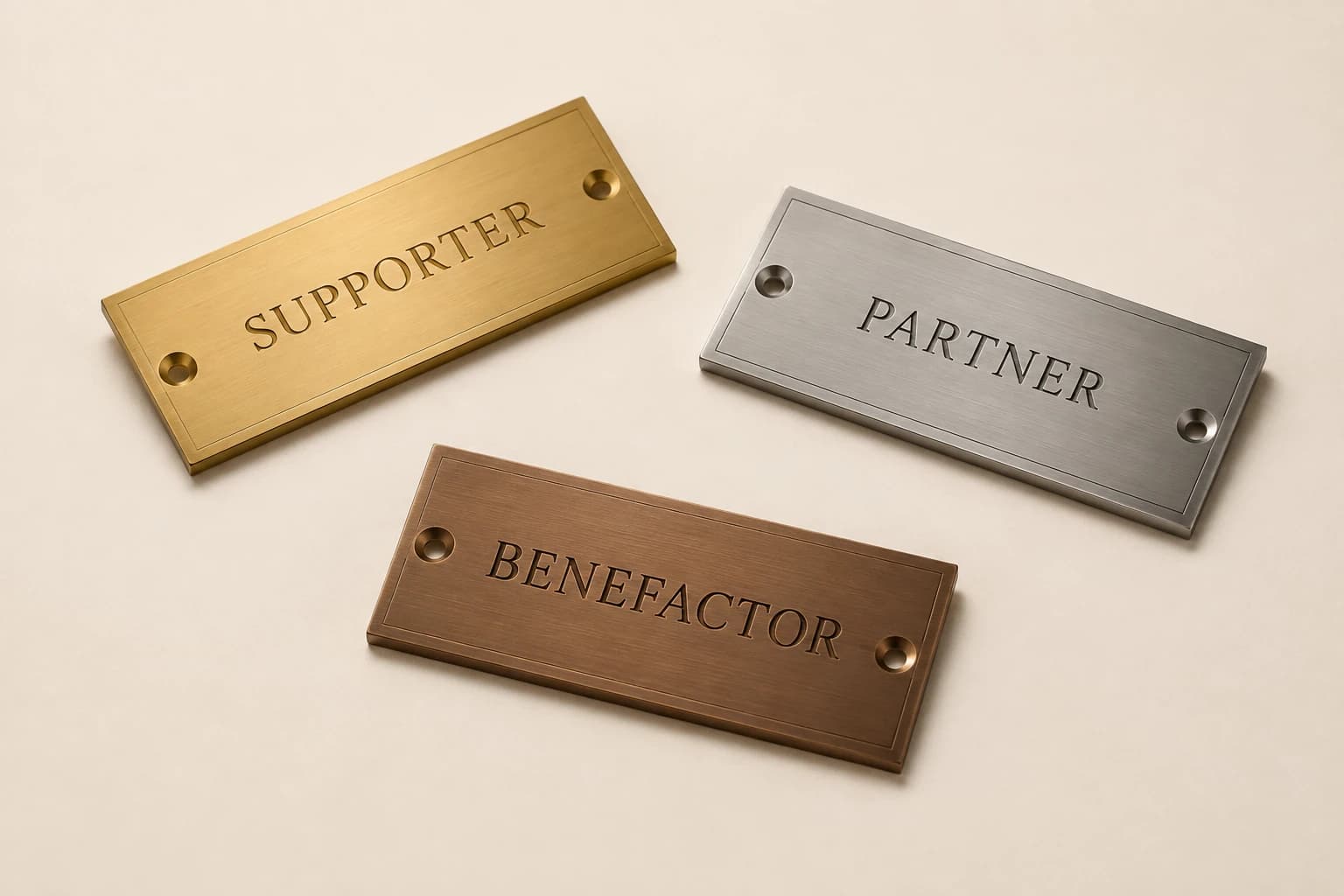
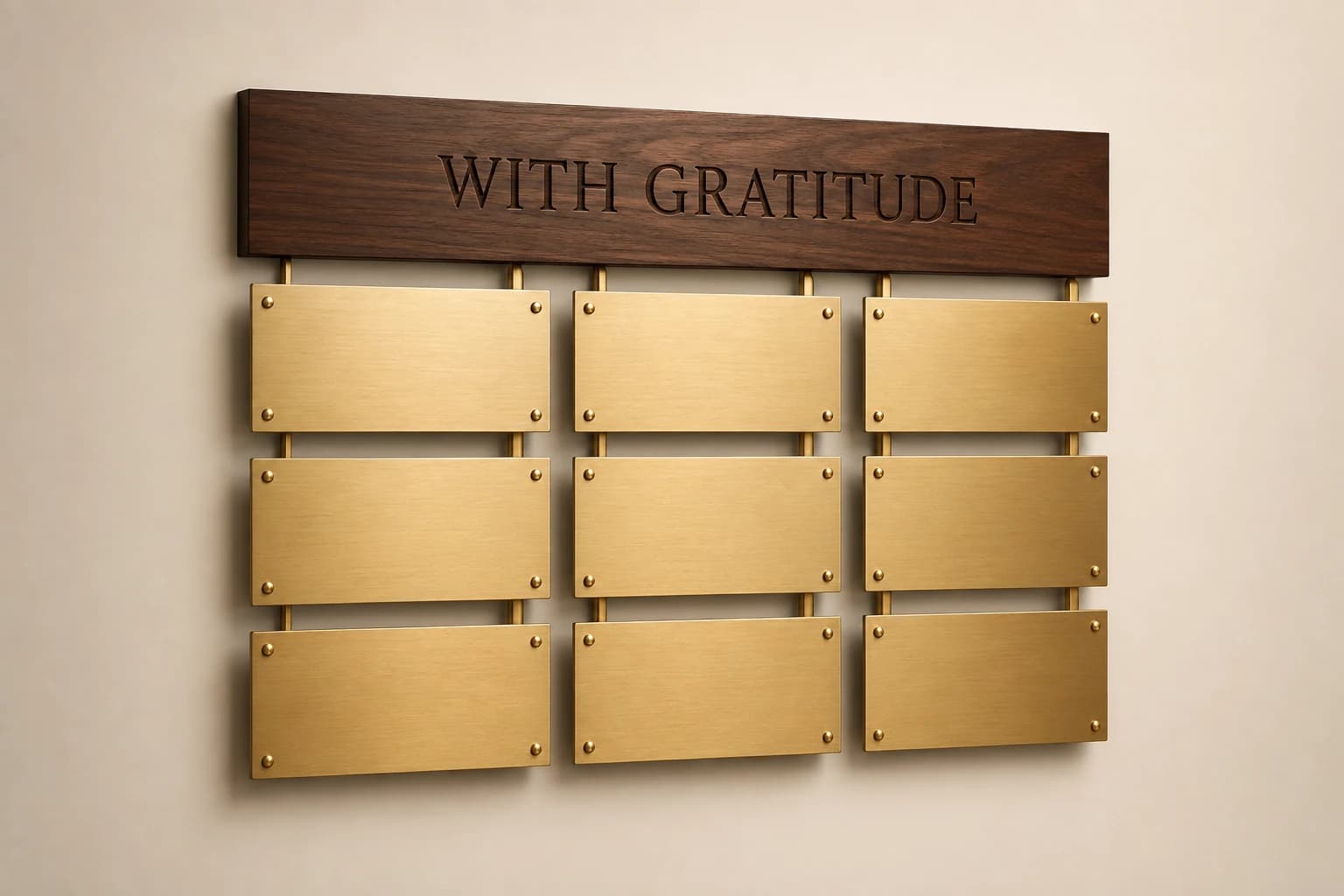
Should donor names use Mr. and Mrs., Dr., or middle initials?
Most donor walls drop Mr. and Mrs. and use first names instead, because it treats both people equally and saves space. Penn Medicine's published donor recognition guidelines, for example, list couples without Mr./Mrs., include middle initials, use the word and instead of an ampersand and leave out affiliations. Your organization can choose differently, but it should choose once.
Decide whether you include professional titles and degrees, such as Dr., MD or PhD. Including them for some donors but not others looks uneven, so make it a written rule. The same goes for Jr., Sr., and numerals such as III: keep them when the donor uses them, because they are part of the legal name.
- Before: Mrs. Helen R. Example — 21 characters. After: Helen R. Example — 16 characters.
- Before: Dr. James Ortiz, M.D. — 21 characters. After: James Ortiz, MD — 15 characters.
- Before: Robert Example Junior — 21 characters. After: Robert Example Jr. — 18 characters.
- Before: Mr. Thomas Wu III — 17 characters. After: Thomas Wu III — 13 characters.
How do you list families, businesses and foundations?
Use The [Last Name] Family only when the donors ask for it, since it does not show who gave. List a business or foundation exactly as its preferred name appears, keeping or dropping The, Inc. and LLC on purpose. Penn Medicine's guidelines also advise checking organization names for details such as a leading The.
- Before: Ortiz Family, The — 17 characters. After: The Ortiz Family — 16 characters.
- Before: The Family of Grace and Leo Park — 32 characters. After: The Park Family — 15 characters.
- Before: Sample Bakery, Incorporated — 27 characters. After: Sample Bakery — 13 characters.
- Before: The Placeholder Family Foundation, Inc. — 39 characters. After: The Placeholder Family Foundation — 33 characters.
- Before: In Honor of Our Employees, Example Co. — 38 characters. After: Example Co. and Its Employees — 29 characters.
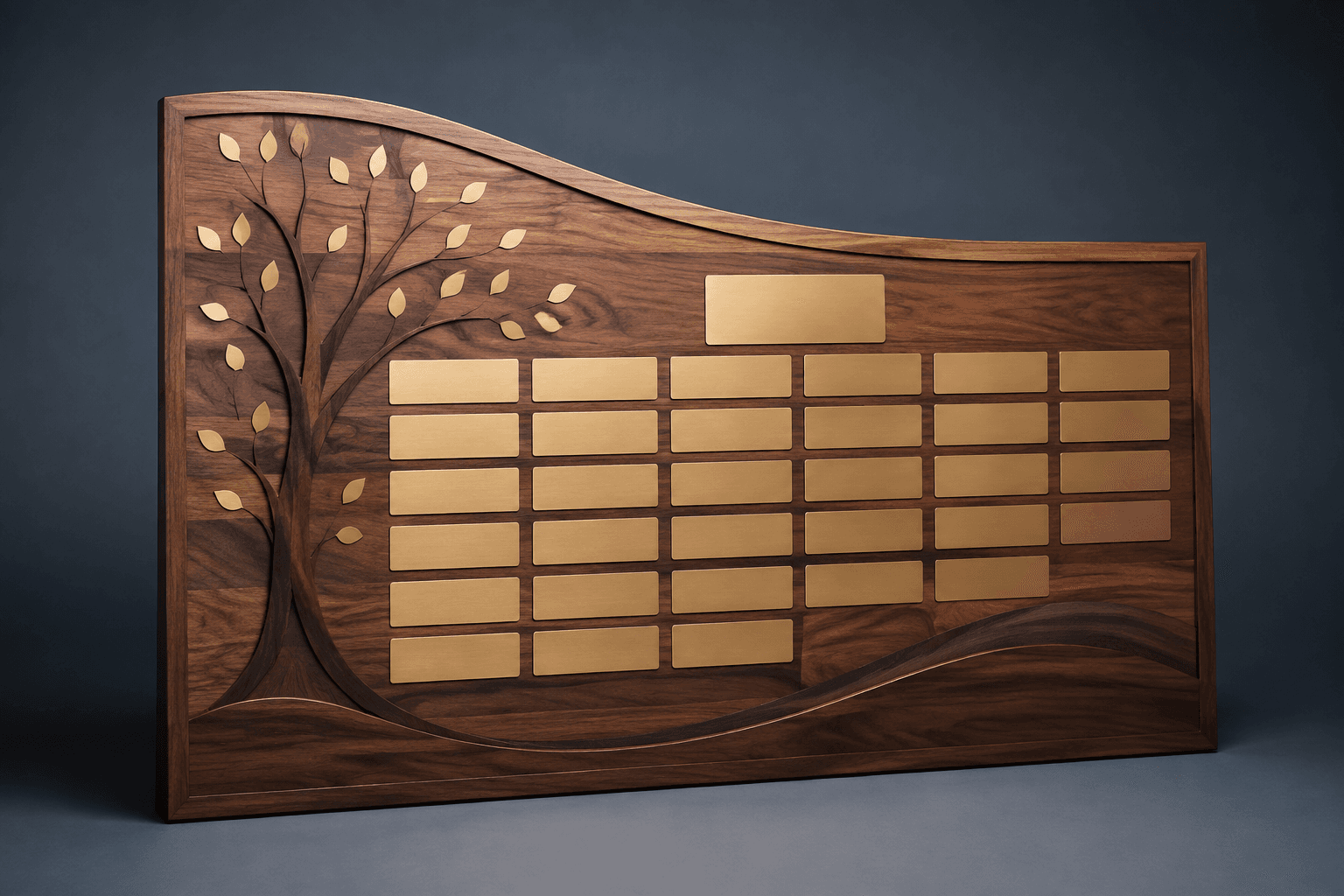
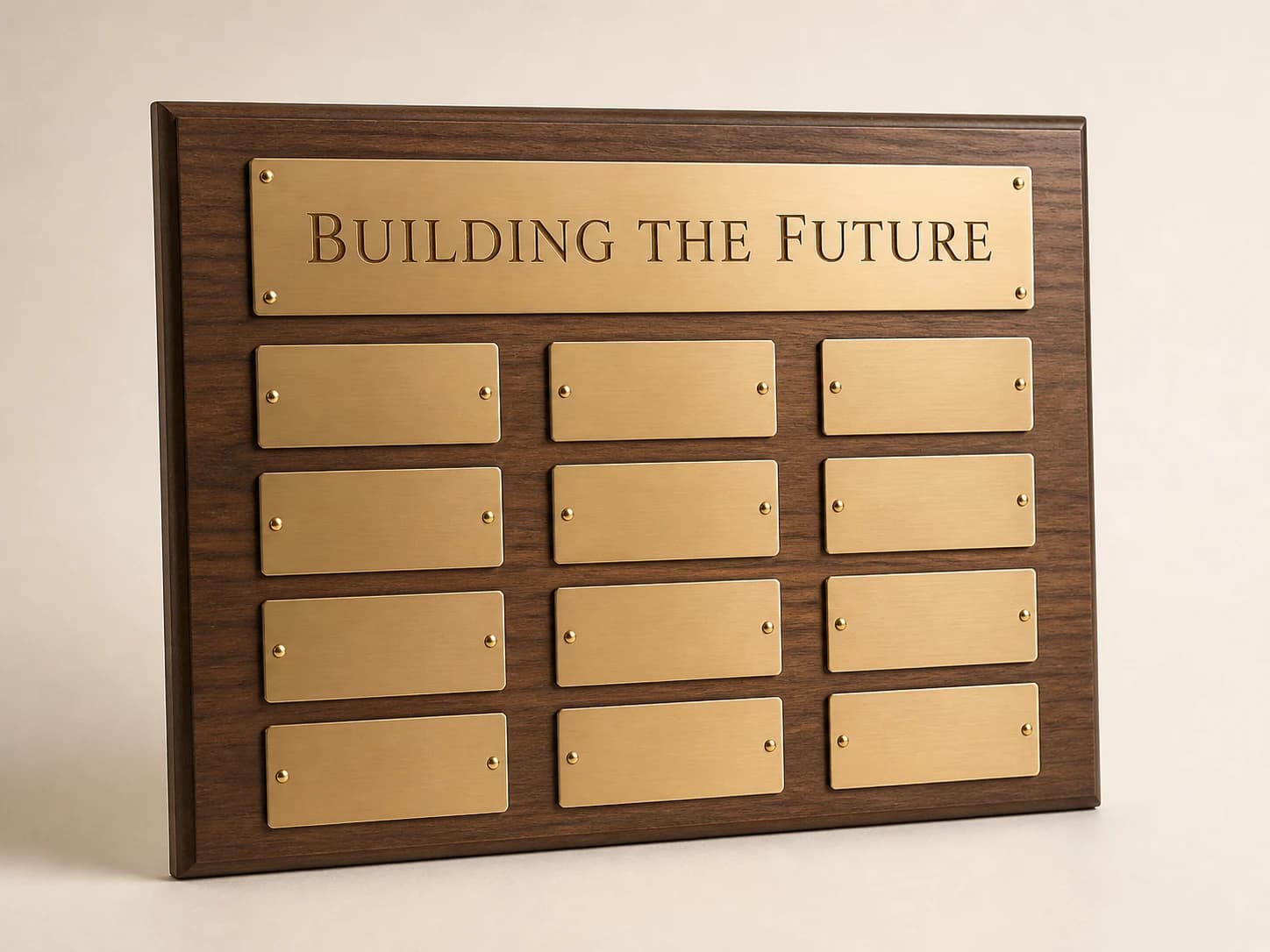
Where does "in memory of" go on a donor wall?
Put the honored person's name on its own line, starting with In Memory of or In Honor of, and the donor's name on the next line if they want credit. In memory is for someone who has died; in honor is for someone living. If the donor has died, list their name normally.
Keep the phrase the same across the wall. Mixing In Loving Memory of, In Memory of and Remembering makes rows look uneven and wastes space.
- Before: In Loving Memory of Our Dear Mother Rose Example — 48 characters. After: In Memory of Rose Example — 25 characters.
- Before: Given by Tom Example in memory of Rose — 38 characters. After: Given by Tom Example — 20 characters.
- Before: Honoring Coach Dee Miller (living) — 34 characters. After: In Honor of Dee Miller — 22 characters.
- Before: Late Frank Example (deceased 2025) — 34 characters. After: Frank Example — 13 characters.
Check your longest donor names
The example loads the eight approved names from the illustrative example. Replace them with your own approved list.
Method: Counts visible characters on each line, including spaces and punctuation, and compares each with the budget you enter. A text count does not confirm physical fit; the actual-size proof does.
Build your plan
Counts include spaces and punctuation. Character count cannot establish physical fit: font, script, layout, material and engraving area require a proof at actual size.
Use the article’s example files
The template opens in any spreadsheet. The first rows are invented examples, not real donors; delete them and add one row per approved listing. Keep it with your gift records and send us only the final approved wall names.
How do you list anonymous donors on a donor wall?
There are three common choices for anonymous donors: a plate that reads Anonymous in the right tier, one plate that counts them, such as Anonymous (3), or no listing at all. Ask each anonymous donor which they prefer and record the answer. Never guess a name or initials for someone who asked to stay anonymous.
Place anonymous plates by the same ordering rule as everyone else. In an alphabetical tier, many organizations put Anonymous first or last; either works if it is always the same place.
- Before: A Friend Who Wishes to Remain Anonymous — 39 characters. After: Anonymous — 9 characters.
- Before: Anonymous Donor, Anonymous Donor, Anonymous Donor — 49 characters. After: Anonymous (3) — 13 characters.
- Before: J.D. (anonymous) — 16 characters. After: Anonymous — 9 characters.
Should a donor wall be alphabetical, by gift date or by tier?
Choose the ordering method by how the wall will grow. Alphabetical order is easiest to read but hardest to keep when new names arrive mid-list. Gift-date order adds new names at the end. Tier order groups donors by gift level, then sorts within each tier. Many walls combine tier order with alphabetical order inside each tier.
| Option | Best for | Adding names later | Watch out for |
|---|---|---|---|
| Alphabetical by last name | A closed campaign with a final, complete list | Hard: a new name often lands mid-row, so plates must shift or be reserved | Decide how to sort families, organizations and Anonymous |
| By gift date | Ongoing giving and walls that grow every year | Easy: new plates go in the next open slot | Visitors cannot find a name quickly, so add a year marker per row |
| By tier, alphabetical within each tier | Capital campaigns with named giving levels | Medium: leave open slots at the end of each tier | A donor who moves up a tier needs a new plate in a new place |
| By campaign or year, then alphabetical | Annual giving societies and perpetual boards | Easy: each new year starts a new block | Plan header plates for each year before the first order |
How do you make sure every name fits its plate?
Find the longest approved name before you choose a plate size, because that name sets the size for every plate in the row. Paste your full list into the Donor Wall Studio engraving checker, one name per line, and it shows the longest line. Then confirm fit on the actual-size proof; the proof, not the count, decides.
Donor Wall Engraved Plates come in sizes from 4 by 2 inches to 6 by 3 inches, but we do not publish a fixed character limit for any size, because fit depends on typeface, letter height and how many lines each plate holds. If one name is much longer than the rest, ask the donor whether a shorter approved form is acceptable, such as dropping a middle name. Never shorten a name without their approval.
Plan open slots at the same time. The donor wall calculator counts current names, reserved slots, rows and columns, and our guide on counting blank fillers and future donor slots covers the reserve in more detail.
How do you get written approval for each donor name?
Send each donor their name exactly as it will be engraved, and ask them to approve it in writing, by email or on a signed form. Include the tier, the in memory or in honor line if any, and whether they want to be listed at all. Keep the approval with the gift record so anyone can check it later.
Penn Medicine's guidelines make gift officers responsible for checking gift agreements for recognition preferences. Whoever owns that job at your organization should sign off on the final list before it comes to us. The downloadable name-approval template on this page has columns for the database name, the approved wall name, its character count, the tier and the approval date.
Illustrative example: applying the style rules to eight names
This illustrative example applies one written style sheet to eight invented database entries for a single giving tier. The rules are: first names, no Mr. or Mrs., the word and, alphabetical by last name, In Memory of on its own line, and Anonymous placed last. The before and after counts show how much space a style sheet saves.
Database entries, before the rules: Mr. and Mrs. David Silva (24), Mark Chen & Lisa Okafor (23), Dr. James Ortiz, M.D. (21), Ortiz Family, The (17), Sample Bakery, Incorporated (27), In Loving Memory of Our Dear Mother Rose Example (48), A Friend Who Wishes to Remain Anonymous (39) and Thomas Wu III (13).
Approved wall names, in order: In Memory of Rose Example (25), which sorts under E, then Lisa Okafor and Mark Chen (25), James Ortiz, MD (15), The Ortiz Family (16), Sample Bakery (13), Ana and David Silva (19), Thomas Wu III (13), and Anonymous (9) last. The longest line dropped from 48 characters to 25, so every name can share one plate size. The Ortiz Family sorts under O, not T.
Paste the approved names into the engraving checker with a budget of 25 to confirm no line runs over, then send the list for written approval before the proof.
Donor wall name questions
These answers cover the questions development and stewardship teams ask most when preparing names for a Donor Wall Studio wall or plate board. Each answer repeats the key facts, such as cost, timing, couples, anonymous gifts and fit, so it makes sense on its own. Send any other question with your quote request.
How much does a donor plate display cost, and how long does it take?
Donor Wall Studio's planning range for a Donor Wall Engraved Plates display is $1,495 to $4,995 per display, depending on size, number of plates and materials. Your written quote confirms the price. Production takes no more than 7 days after proof approval, plus shipping time. Rush production is available, so give us your dedication date when you request a quote.
How do you list a married couple on a donor wall?
The most common style is both first names and the shared last name, joined by and, such as Ana and David Silva (19 characters). If the partners have different last names, list each full name, such as Lisa Okafor and Mark Chen. Choose one rule for whose name comes first and use it for every couple on the wall.
Should we use Mr. and Mrs. on a donor wall?
Most walls drop Mr. and Mrs. and use first names, which treats both people equally and saves space. Penn Medicine's published guidelines, for example, list couples without Mr./Mrs. and use the word and instead of an ampersand. If your organization prefers formal titles, use them for everyone. Ask any donor who has a strong preference.
How do you list anonymous donors?
Ask each anonymous donor to choose: a plate reading Anonymous in their tier, a combined plate such as Anonymous (3), or no listing at all. Record the choice with their gift. Place anonymous plates in the same position in every tier, usually first or last. Never use initials or a hint for someone who asked to stay anonymous.
Should donor names be in alphabetical order?
Alphabetical order is easiest to read, but it is hard to keep when new names arrive, because they land mid-row. Walls that grow every year often use gift-date order or start a new block each year. Capital campaigns usually group by tier and sort alphabetically inside each tier, with open slots left at the end of each tier.
How many characters fit on a donor wall plate?
There is no single number. Fit depends on the plate size, typeface, letter height and number of lines, so we confirm it on the actual-size proof. To plan, paste all names into the engraving checker and find the longest one, since it sets the size for its row. Ask the donor before shortening any name.
Sources and scope
The sources below support the cited technical details. The ordering workflows are editorial recommendations. Your project specification, price and schedule are established in the written quote and approved proof.
- Penn Medicine: Donor Recognition Style Guidelines · checked 2026-10-03
Which buying guide should you read next?
All buying guidesFor worldwide Donor Wall Studio orders, compare donor-name panels against the lobby’s real background and lighting before choosing brushed metal or clear acrylic. Transparency, printed backing and surface finish can change the proposed appearance. Ask for a representative name-field sample in the intended setting rather than treating a clean catalog rendering as a readability test.
For worldwide Donor Wall Studio orders, brief the donor wall with a measured display area, component dimensions, gaps and a position map for the installer. A row-and-column count establishes capacity only. Keep the overall wall, proposed arrangement and attachment decisions distinct so the final handoff describes the actual installation location.
For worldwide Donor Wall Studio orders, count approved donor names, reserved positions and physical blank fillers separately. A vacant slot is space, while a filler is an ordered component. Decide which unused positions receive blanks now, which remain open and whether any additional stock has an approved later use.
Count physical name components separately from donor records and reserve capacity explicitly for future additions. A multi-location donor wall order needs an approved hierarchy, a wall-specific layout and a component schedule that explains where every plate, tile or header belongs.