Donor Wall Studio · buyer guide
Personal donor gifts versus building recognition
For worldwide Donor Wall Studio orders, choose a personal donor gift for an identified recipient and building recognition for an approved public display. Keep private gift wording and addresses separate from the public name list. Ordering both can support one appreciation program while requiring different consent, location and delivery decisions.
Reviewed 2026-09-05 · AI-assisted editorial review. General buying guidance; illustrative scenarios are not customer case studies. Images are AI-generated concepts.
A personal donor gift belongs in a recipient’s hands, while building recognition becomes part of an organization’s public space. Ask which outcome the program actually intends before comparing products. A donor may appreciate a private keepsake while preferring no public name display, or may approve a building inscription without wanting an additional object. Keep those choices with the development team and the donor’s authorized preferences. Do not treat one format as a substitute for a naming commitment or recognition policy that the organization has already approved. If both are wanted, describe them as two related deliverables with separate owners and destinations. The buying decision then begins with the role of each object rather than the assumption that a larger public display is always the more appropriate thank-you.
How do you write a private gift message in the right voice?
A personal gift can carry a direct expression of gratitude that would feel out of place on a public wall. Ask who is speaking and what the donor has approved for visible personalization. Avoid placing contribution amounts or confidential project details on the object merely because they appear in internal records.
If the gift is intended for a household or organization, confirm the preferred recipient wording rather than assuming one individual should be named. Keep any longer explanation in a separately reviewed letter. The gift should remain understandable and welcome in the recipient’s own setting, where there may be no institutional context to explain an abbreviation, campaign code or internal tier name.


How do you give the building inscription its public context?
A public recognition piece needs to explain its relationship to the building, campaign or program. That context may include an approved heading, project name or dedication statement, but it should not add claims the development team has not authorized. Review the donor’s preferred public name independently from the personal gift name; they may intentionally differ.
A foundation might want its formal name on a wall and a personal salutation in a thank-you gift. Show the complete public arrangement to the authorized reviewer, including neighboring names and category headings where relevant. Correct text can still communicate the wrong recognition if it is placed under the wrong campaign or displayed in an unintended hierarchy.
Impact Signs discusses future names and recognition categories.
Sources: Impact Signs: 4 Steps to Creating a Memorable Donor Recognition Display
How do you compare complete delivery and installation scope?
A personal gift may require individual packaging and a confirmed receiving address. Building recognition may require a measured location, component schedule and professional installation review. Compare these full scopes rather than object prices alone. If the program includes both, keep personal shipping information in a restricted delivery record and share only the necessary public text with the installation team.
Ask the supplier to distinguish the gift, any companion card or packaging, the building component and work performed by others. A concept image showing a plaque on a wall does not establish that installation is included. Similarly, a product photograph beside a presentation box does not settle the packaging for this order unless the proposal confirms it.
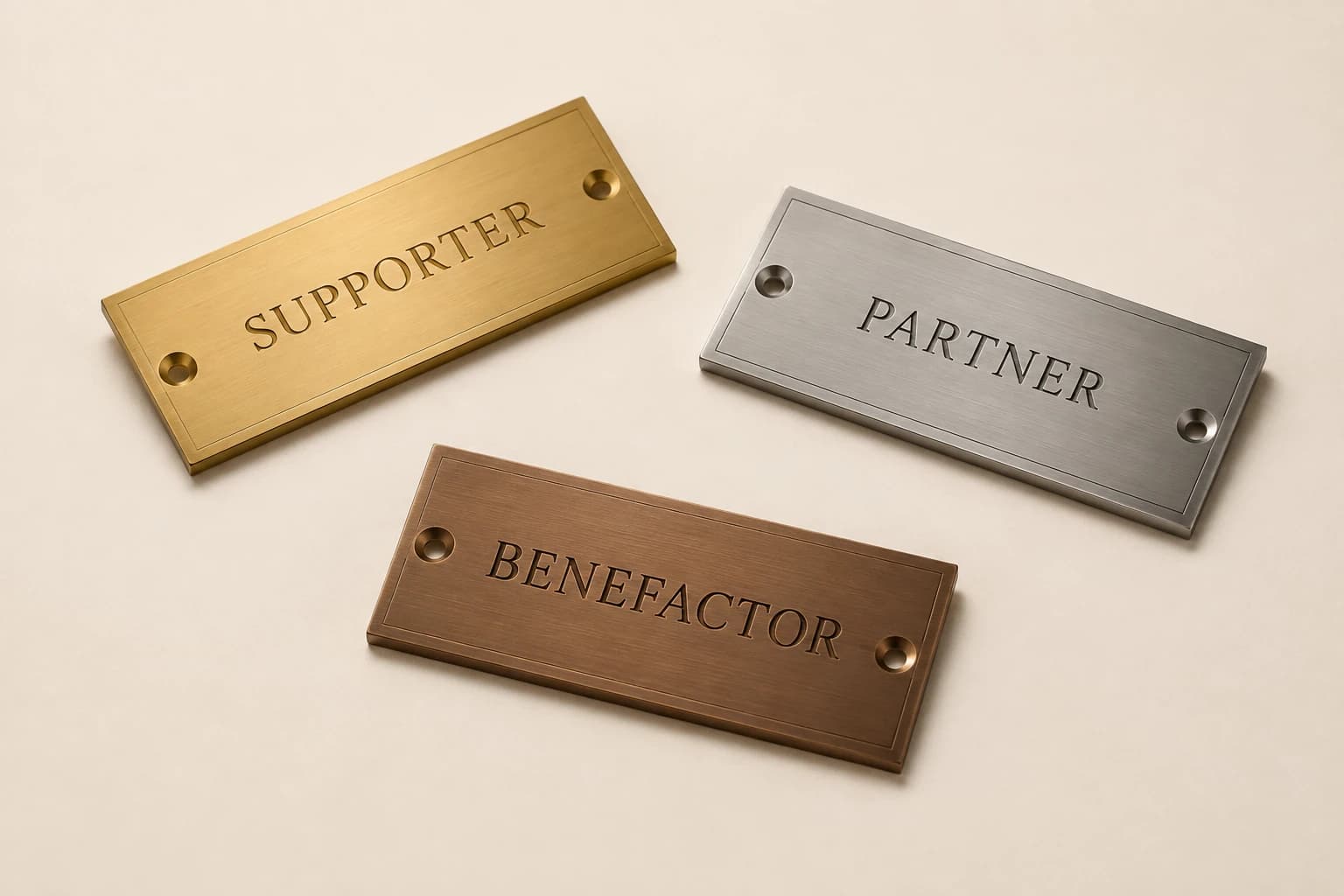
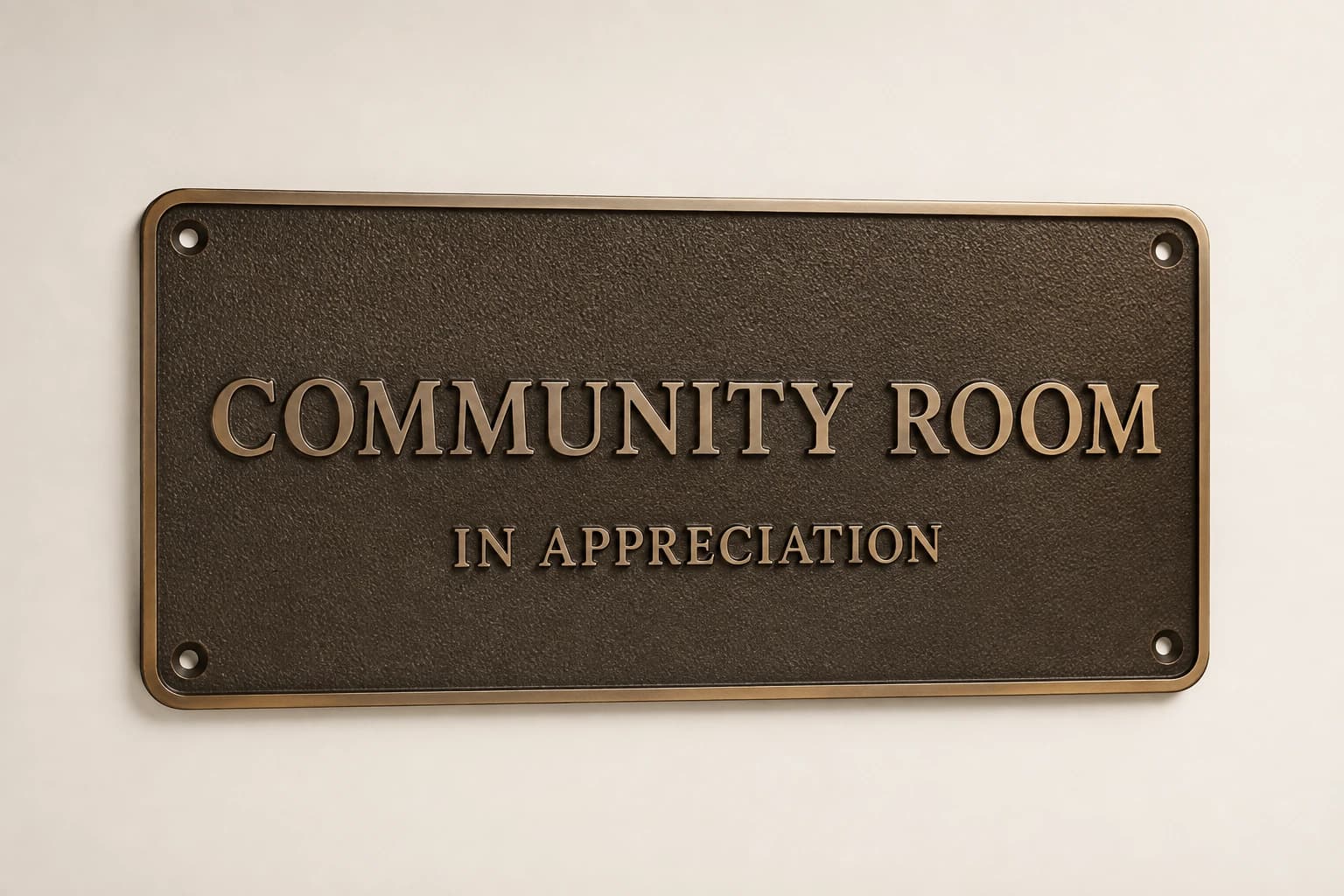
How do you coordinate timing without forcing one shared deadline?
The personal thank-you may be ready before the building opens, while a public wall may depend on final donor approvals and construction access. Decide whether the two deliverables need to arrive together or should follow different schedules. Do not delay a thoughtful private acknowledgment solely because an installation date remains uncertain unless the program owner prefers that approach.
Conversely, do not engrave a public dedication prematurely to match a gift mailing date. Keep the approval states and required handoffs separate. If the personal gift refers to an unveiling date, confirm that wording carefully or use an approved message that does not become inaccurate when the event moves. Each piece should remain truthful on its own.
Total personal gifts and building-recognition pieces
Load the fictional example, then replace its inputs with the reviewed details for your project.
Method: Multiply the entered units by pieces per unit, then add explicitly entered extra category pieces and spares. The result counts inputs without deciding recognition eligibility or product inclusions.
Build your plan
Set spares yourself. This calculates the quantities you enter; it does not assume a recommended buffer.
Use the article’s example files
Sample rows are illustrative and are not production instructions. Replace their assumptions, keep private records separately and complete the approval fields before using the sheet for a real order.
How do you maintain distinct records for future changes?
Save a personal-gift proof separately from the building-recognition record, even when both use the same logo or donor name. A later address change affects delivery, while a preferred public name correction may affect an installed wall. The coordinator should be able to identify the affected object without assuming every record needs the same change.
If a donor requests anonymity after an earlier approval, route the matter to the organization’s authorized development owner; a production worksheet should not decide the policy response. For ordinary replacement requests, retain the historical context and the exact approved wording. This keeps the two forms of recognition coordinated without making one object’s ownership, privacy or installation assumptions spill into the other.
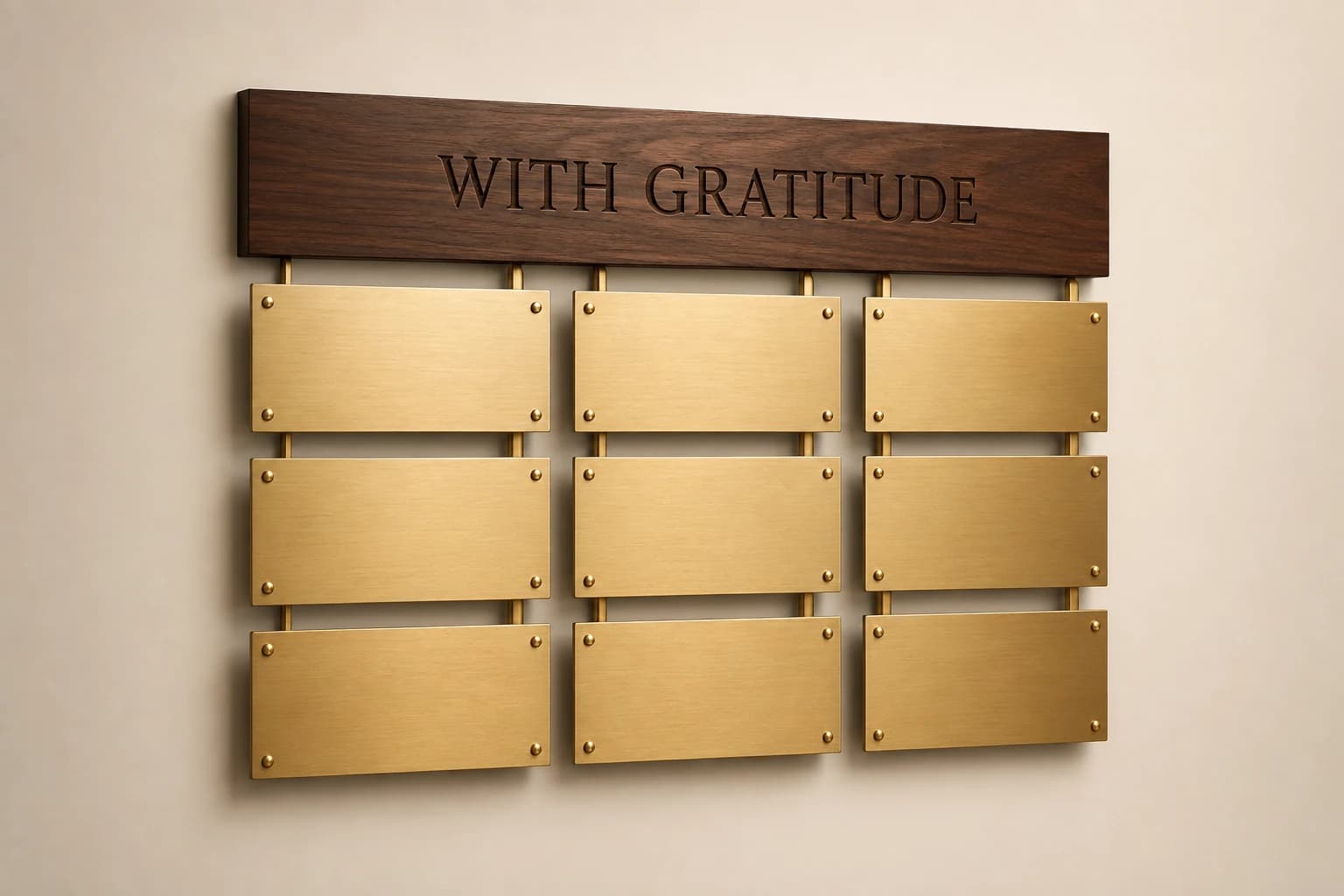
How do you treat a shared household gift as a separate naming decision?
A donor record may represent a couple, a family foundation or a company, while the personal gift is intended for a particular person. Ask the development team to supply the approved recipient wording for that object instead of copying the public wall name into every field.
A formal foundation name may be appropriate on the building and awkward as the sole salutation on a personal keepsake. Conversely, naming one individual on a public wall may misrepresent an organization’s approved recognition. Show the two proposed inscriptions together so the reviewer can confirm that the difference is intentional. If several household members will receive separate gifts, count each physical object and approve its message. If one shared gift is selected, identify who receives it and where it belongs. The number of donors in an internal system, the number of public names and the number of take-home gifts are related records, but none is a reliable substitute for the others.
How does this illustrative planning example work?
A fictional nonprofit plans twelve personal gifts for approved recipients, two separately approved building-recognition pieces and one explicitly chosen spare gift component. Those fifteen physical pieces do not represent fifteen donors. The coordinator keeps the personal gift names and addresses separate from the public display list, then reviews the two building pieces against their own locations and headings.
The quantity calculation combines inventory for planning while the worksheet preserves the different purposes. Load twelve personal-gift recipients at one gift each, two separately approved building-recognition pieces and one expressly chosen spare gift component. Twelve personal gifts plus two building pieces plus one spare equals fifteen physical pieces. The total does not establish fifteen donors or fifteen public names. The worksheet keeps gift-recipient approval, public display approval and the spare component’s intended use on different rows so the purchasing total does not erase those distinctions.
Personal donor gift or Building recognition: which fits the intended recognition?
A personal donor gift belongs to an intended person or household and can use an approved private message. Building recognition belongs to a public display with its own naming policy and location. Compare those owners and audiences separately; sending a gift does not by itself authorize adding a donor’s name to a wall.
| Option | Personal donor gift | Building recognition |
|---|---|---|
| Best reason to choose it | Use this for a direct acknowledgment intended for the recipient’s own space and preferred form of address. | Use this for an approved public record tied to a location, campaign or recognition program. |
| Main review question | Has the recipient wording and destination been approved, and does the message disclose only intended information? | Are public display preferences, category placement and the physical installation all approved? |
| What to specify | Specify the personal inscription, individual packaging requirements, receiver and any separately reviewed letter. | Specify the public name, contextual heading, position map, measured location and installation responsibilities. |
| Later change | A recipient can request a private gift correction without authorizing a change to public building recognition. | A public display update needs its own program approval, location mapping and component proposal. |
What should the organizer confirm before ordering?
Separate the recipient’s private gift decision from the organization’s public recognition decision. Household wording, shipping addresses and a donor-wall name do not automatically share one approval. Confirm the actual owners and deadlines for each physical group so a combined purchase can remain clear about whose message appears in which setting.
How should personal gifts and building pieces be priced?
Ask Donor Wall Studio to quote each physical group with its own quantities, wording, dimensions and delivery or installation scope. Request the applicable minimum or range and identify any individually packed gifts. The fictional fifteen-piece total combines inventory categories for planning; it is not a donor count or evidence that all pieces share one construction.
Does accepting a gift authorize public donor recognition?
Keep those decisions separate. The organization should confirm the approved public display name and recognition scope through its own responsible reviewer. A personal thank-you can be welcomed while public naming is declined or expressed differently. Do not transfer a shipping label or private gift inscription directly onto a building’s donor list.
Can a household receive one gift with several names?
Ask the authorized contact how the household wants the personal gift addressed, then count that actual object separately from individual donor records. A shared gift does not settle whether the public display uses joint, separate or anonymous recognition. Preserve the approved wording for each context rather than assuming one naming decision covers both.
Must the gift and building installation share a deadline?
Coordinate them around the program’s intended occasions, but keep distinct receiving and installation dates when their dependencies differ. Personal gifts may need approved addresses and packing, while a wall piece may await site readiness. One late installation decision should not be hidden by marking the entire recognition project ready for the gift ceremony.
What changes when a donor requests a later name correction?
Identify whether the correction applies to a private gift, public display or both, then obtain the relevant approval for each. The physical remedies can differ. Keep prior wording and the requested change visible so a personal preference is not assumed to rewrite a historical building dedication or another household member’s approved inscription.
Sources and scope
The sources below support the cited technical details. The ordering workflows are editorial recommendations. Your project specification, price and schedule are established in the written quote and approved proof.
- Impact Signs: 4 Steps to Creating a Memorable Donor Recognition Display · checked 2026-09-05
Which buying guide should you read next?
All buying guidesFor worldwide Donor Wall Studio orders, use the recognition program’s approved tier names consistently across donor walls, then place each building’s local context in a separate field. Different dimensions can justify different layouts without creating a new donor category. Confirm category membership and display names through the organization’s designated reviewer.
For worldwide Donor Wall Studio orders, count approved donor names, reserved positions and physical blank fillers separately. A vacant slot is space, while a filler is an ordered component. Decide which unused positions receive blanks now, which remain open and whether any additional stock has an approved later use.